01
Explain the work
Set out the problems you help with, the people you work with and what coaching with you actually looks like.
Websites for coaches
A clear place to explain who you help, how you work and what someone needs to do next.
People often arrive on a coaching website unsure what coaching is, or if it is right for them. They need to understand the work, feel comfortable with the person offering it and find practical information they need, easily.

What the site needs to do

A good coaching website does not need grand promises. It needs enough useful information for someone to decide whether your work may suit them and whether they feel ready to make contact.
01
Set out the problems you help with, the people you work with and what coaching with you actually looks like.
02
Give people a genuine sense of you through your approach, experience, qualifications, values and boundaries.
03
Put booking, email, telephone and discovery-call options where people can find them without completing a small obstacle course first.
ADHD, autism and neurodivergent coaching
Neurodivergent clients are not one audience with one preferred style. Some want detail before making contact. Others need a short route to the essentials. Some will book online. Others may need to email first.
The site can support those differences with direct language, useful headings, visible prices, more than one contact route and a clear explanation of what happens next. It can also make adjustments and access needs easy to discuss without making them feel like an awkward exception.
Say what you help with rather than relying on vague claims about transformation or potential.
Session length, format, price, location and funding information can be easy to find.
Booking links can sit alongside email or telephone options rather than replacing them.
Explain how clients can raise communication, sensory or other access needs before a session.
What the website can include
One-off sessions, packages, group work, workplace coaching or funded support can each have a clear place.
Your story matters, but it should help a client understand how you coach rather than read like a biography.
Training, professional memberships, insurance and ethical commitments can be shown clearly.
Show session prices, package costs, Access to Work information or what is discussed before a quote.
Connect Calendly or another booking service and keep direct contact details available too.
A simple blog or resources section can show how you think and answer common questions before an enquiry.
See a coaching website in action
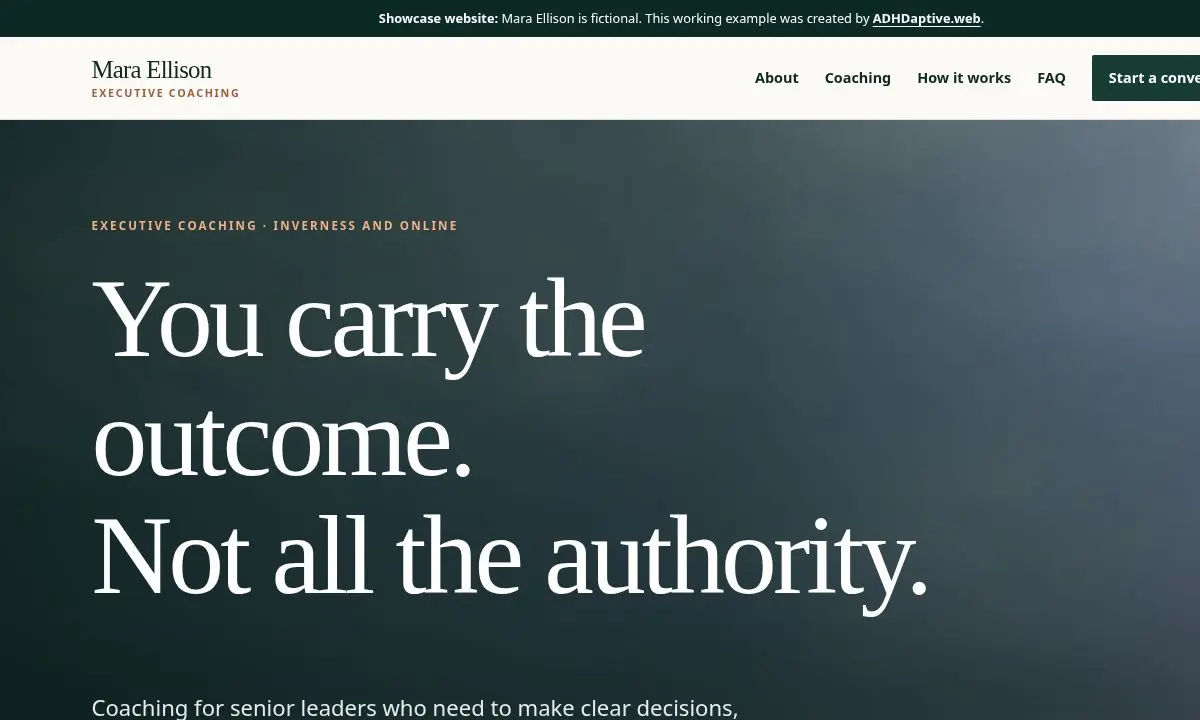
This working example shows how a coach can explain their approach, services, prices and process without sending visitors through a maze of pages.
Mara Ellison is a fictional executive coach based in the Scottish Highlands. Her identity, prices and testimonials are demonstration content. The website itself works exactly like a real one-page coaching site.
Explore the coaching website (opens in a new tab)Starting prices
The final price depends on the number of pages, how much content needs shaping and which booking or payment services need connecting.
Focused landing page
One page for a new coach, a specific programme, a workshop or a single coaching offer.
Small coaching website
A straightforward multi-page site covering your coaching, approach, prices, credentials and contact route.
Larger bespoke website
A more substantial practice with several audiences, programmes, resources or more involved technical work.
A basic blog can be added from £200. Ongoing minor updates start from £15 a month, including one supplied blog post or a similar small change each month.
How it works
I need to understand how you work before deciding how the site should be organised.

You explain your coaching, who you work with and what is difficult about the current site or setup.
I set out the pages, content structure, price and the information I need from you.
You see the website while it is being developed and can comment before anything goes live.
The main checks are completed, booking and contact routes are tested and the website becomes yours.
Built by a coach

I am Andrew Lambert, founder of ADHDaptive. I run my own coaching practice, work with neurodivergent clients and have built the website that supports that business.
Before ADHDaptive, I spent nearly 30 years in IT, systems and service delivery. That gives me both sides of the job: understanding what a coaching client needs to know and handling the technical work needed to make the site function properly.
I will not try to turn your work into a generic coaching brand. The aim is to make it easier for the right people to understand what you offer and decide whether to contact you.
See the ADHDaptive coaching website
For more about how I build websites, what is included and how the service works, visit the ADHDaptive.web home page .
Common questions
No. The website can be for executive, career, wellbeing, business or other coaching. Neurodivergent coaching can be your main focus, one part of the work or not mentioned at all.
Yes. Calendly and similar booking services can be connected, along with payment links where needed. The exact setup depends on how you sell and deliver your sessions.
Yes. Rough notes, existing documents and half-formed service ideas are enough to begin. I can help organise them into a clear structure before the page is written.
Yes. Qualifications, professional memberships, ethical commitments, insurance and relevant experience can be presented clearly without turning the page into a long CV.
Yes. I can review the existing site and rebuild it as a simpler static website where that suits the coaching business. Domain, DNS and email settings are checked before anything changes.
A focused landing page starts from £250, a straightforward small coaching website starts from £500 and larger bespoke sites start from £2,000. You receive a clear price before work begins.
Start with a conversation
You do not need a polished brief. Your current website, service notes, booking links or a list of things that are not working is enough to start.